
Introduction to Vietnamese Pho Recipe
What is Pho and Why is it Loved?
If you’ve ever wandered through a bustling Vietnamese market or dined at an authentic Vietnamese restaurant, you might have encountered pho, a comforting soup that warms both the body and soul. At its core, pho is a fragrant broth filled with tender beef, fresh noodles, and an array of colorful toppings. But what makes this dish so beloved?
First and foremost, the depth of flavor in a traditional Vietnamese pho recipe is unparalleled. The broth, often simmered for hours with aromatic spices like star anise and cinnamon, creates a balance of savory and slightly sweet notes that captivates the palate. It's not just a meal; it’s an experience that brings people together around a steaming bowl.
Moreover, pho can be easily customized to suit individual preferences—from the type of meat to the various toppings like fresh herbs, bean sprouts, and chili. This versatility means everyone can find their perfect bowl, making it a go-to comfort food not just in Vietnam, but around the world. For those eager to dive deeper into this culinary delight, check out the full Vietnamese Pho recipe for a step-by-step guide!
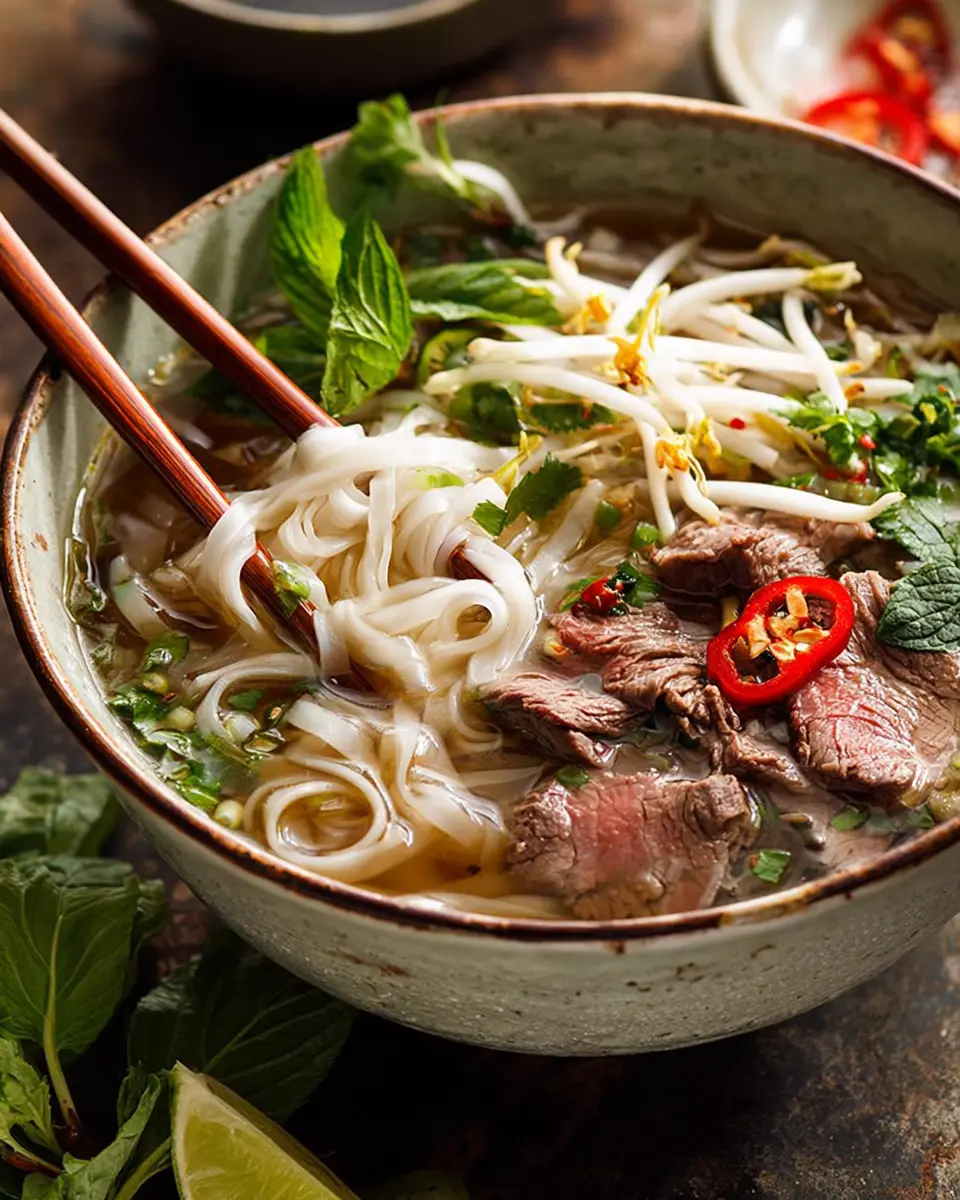
Ingredients for Vietnamese Pho Recipe
Creating an authentic Vietnamese Pho recipe is all about gathering the right ingredients that blend together to create that soul-warming bowl of goodness. Here’s a breakdown of what you’ll need.
Key ingredients for the broth
The heart of any great pho lies in its rich and aromatic broth. For this, you’ll need:
-
Aromatics: 2 large onions and 150g ginger, charred to enhance flavor.
-
Spices: Essential picks include 10 star anise, 4 cinnamon quills, and 1.5 tablespoon coriander seeds. These spices create that unique aroma and warmth that pho is known for. You can read more about the importance of spices in broth-making here.
-
Beef bones: 1.5kg beef brisket and 2kg meaty bones add depth. Don’t skip the marrow bones for added richness!
Essential toppings and noodles
To truly elevate your pho experience, gather these must-have toppings and noodles:
- Noodles: Choose 50g dried rice sticks (or 120g fresh) for that perfect texture.
- Toppings: A handful of bean sprouts, 3-5 sprigs of Thai basil, and lime wedges are traditional favorites. For a kick, include sliced red chilies and hoisin sauce. You can get creative with toppings based on your taste preferences!
Ready to dive into making your own pho? Let's get cooking!
Step-by-step Preparation of Vietnamese Pho
Making authentic Vietnamese Pho may seem daunting at first, but with the right preparation, it can be an incredibly rewarding experience. Let's dive into the steps that’ll lead you to a fragrant and delicious bowl of this beloved noodle soup.
Preparing the Aromatics
Start by gathering your aromatics, which are essential for building the depth of flavor in your broth. You’ll need:
- 2 large onions, halved
- 150g ginger, sliced down the center
Heat a heavy-based skillet over high heat until it’s smoking (no oil needed!). Place the onion and ginger cut side down in the pan. Cook for a few minutes until they are nicely charred, then flip them over and transfer them to a plate.
Next, lightly toast the spices in a dry skillet. You’ll need 10 star anise, 4 cinnamon quills, 4 cardamom pods, 3 cloves, and 1.5 tablespoon coriander seeds. This should take about 3 minutes on medium-high heat. This step intensifies the aromatic oils that will flavor your broth immensely.
Removing Impurities from the Beef
For a crystal-clear broth, it’s essential to remove any impurities from the beef. Begin by rinsing your 1.5kg brisket and 1kg meaty beef bones in cold water. Then, place them in a large stock pot and cover with water, bringing it to a boil for about 5 minutes. Once boiled, drain the pot and rinse everything under cold running water.
This process ensures that your broth will be beautifully clear and not cloudy.
Making the Broth
After cleaning, it’s time to craft your broth. In the same pot, bring 3.5 liters of water to a rolling boil. Add the rinsed bones and brisket, along with your prepared aromatics and toasted spices. Stir in 2 tablespoon white sugar and 1 tablespoon salt. Make sure the water just barely covers all ingredients. Cover the pot with a lid and let it simmer for 3 hours.
After this time, carefully remove the brisket, which should be tender enough to fall apart. Let it cool, then refrigerate for later use. Allow the remaining soup to simmer uncovered for another 40 minutes.
Straining the Broth
Now comes the moment of truth. Carefully strain your broth into another pot, discarding the solids. You should end up with about 2.5 liters of fragrant broth. If it exceeds this amount, gently reduce it by simmering it longer. Finally, add 40 ml of fish sauce and adjust the seasoning to taste. Your broth should be savory, slightly sweet, and deeply aromatic.
Assembling the Bowls
As the broth is simmers, start preparing your rice noodles according to the package instructions. Once ready, place a portion of the noodles in a bowl, topped with thinly sliced raw beef and a few pieces of brisket. Now, ladle the hot broth over the top—this will perfectly cook the raw beef.
To finish, serve your pho with an array of toppings on the side, including fresh beansprouts, Thai basil, coriander, lime wedges, and spicy Sriracha. This allows everyone to customize their own bowl to perfection!
What are you waiting for? Roll up your sleeves, and let’s enjoy the authentic flavors of this delightful Vietnamese Pho recipe. Links for additional resources on Pho preparation can help enhance your experience, such as Vietnamese cooking principles and spice usage!
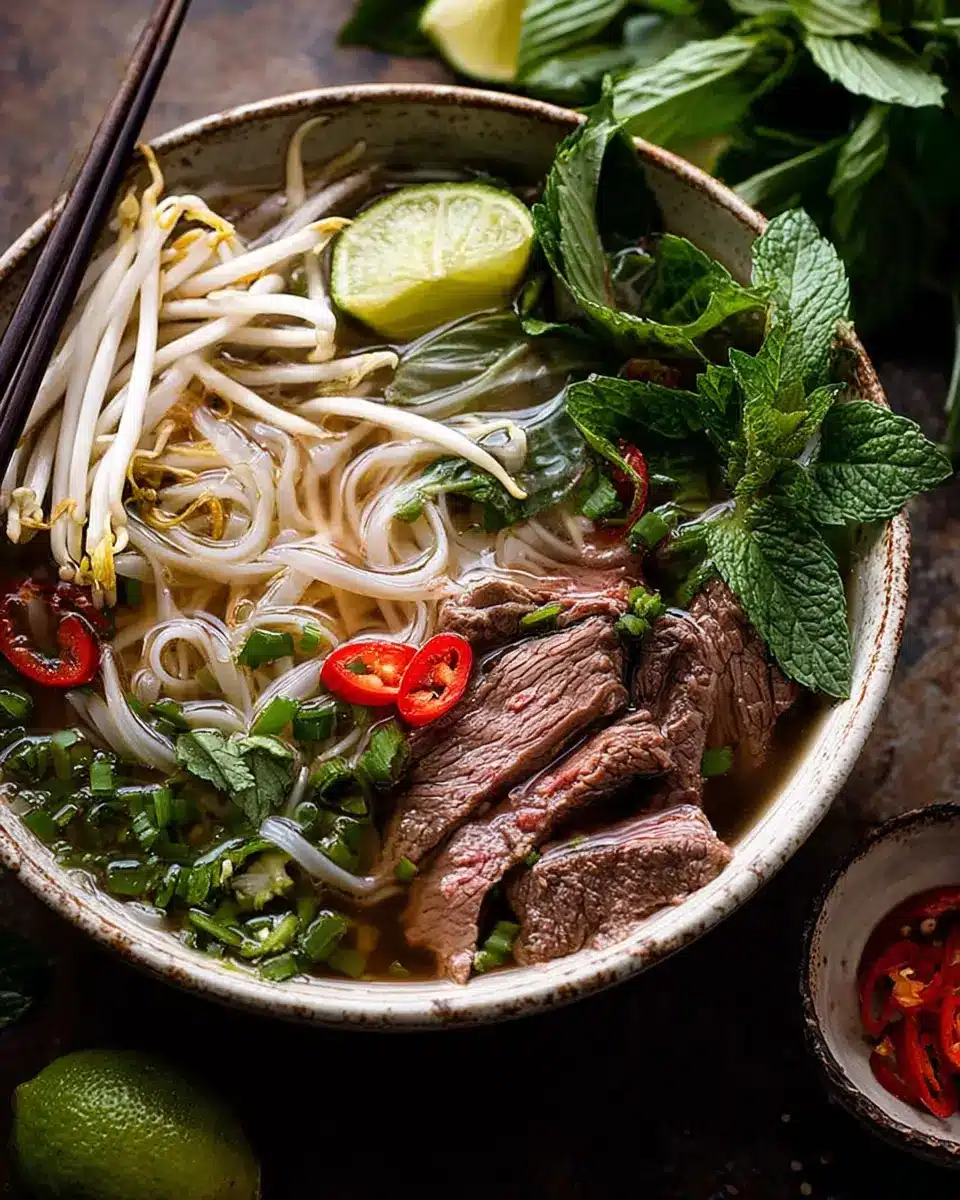
Variations on Vietnamese Pho
Vegetarian Pho Options
If you’re leaning towards a plant-based lifestyle or simply craving a meatless meal, don’t fret! Vegetarian Pho can be just as rich and flavorful. Start with your homemade vegetable broth infused with aromatics like onion, ginger, and a mix of spices. For protein, consider adding tofu, mushrooms, or even tempeh. Enhance the dish with vibrant toppings such as fresh herbs, bean sprouts, and a splash of lime for that zesty finish. A great resource for vegetarian broth recipes can be found on Minimalist Baker.
Different Types of Meat for Pho
While traditional Vietnamese Pho usually features beef, feel free to get creative with your meat choices! Popular alternatives include tender chicken, flavorful duck, or even seafood like shrimp and fish. Each option brings a unique taste and texture to the broth, allowing you to tailor the dish to your preferences. Staying adventurous, why not blend meats for a delicious fusion? The combination of beef brisket and chicken, for instance, creates a delightful depth of flavor that’s worth trying!
Cooking Tips and Notes for Vietnamese Pho
Enhancing the broth's flavor
To elevate your Vietnamese pho recipe, consider incorporating a few simple techniques. Start by charring the onions and ginger to release their natural sweetness and aroma. Toast the spices beforehand; this small step intensifies their flavors, creating a deliciously fragrant broth. A touch of fish sauce adds a savory depth, while adjusting salt and sugar can enhance the overall taste profile. Remember, balance is key—your broth should be a harmony of beefy, savory, and subtly sweet notes.
For additional tips, check out sources like Serious Eats for more insights into broth mastery.
Tips for slicing beef
Slicing the beef for your pho can make a significant difference in texture and flavor. To achieve paper-thin slices, partially freeze the beef for about 30 minutes until firm. This makes it much easier to slice. Aim for a sharp knife and cut against the grain to ensure tenderness. If you're not comfortable with raw beef, you can always dip it in the hot broth to cook quickly. Not only does this method keep all the flavors intact, but it also guarantees a perfect medium-rare finish right in your bowl!
For more expert tips on meat preparation, you might find it helpful to visit ChefSteps.
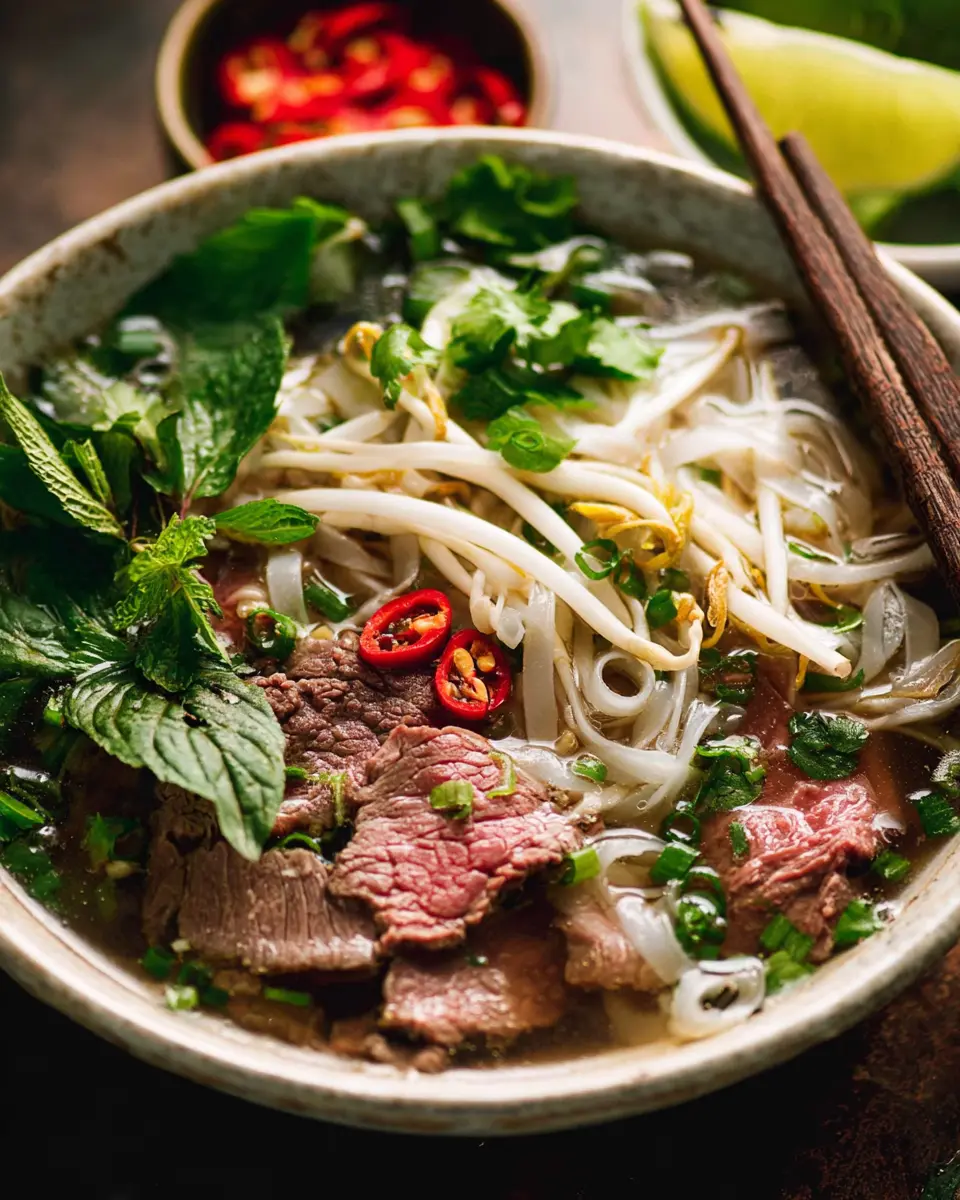
Serving Suggestions for Vietnamese Pho
Traditional serving style
When you enjoy this delightful Vietnamese pho recipe, remember that presentation matters! Traditionally, pho is served with a bowl of steaming broth filled with noodles and tender slices of beef. The excitement comes from the array of toppings placed on the side, allowing you to customize each bite. Fresh herbs like Thai basil and cilantro, crunchy bean sprouts, and zesty lime wedges are essential for that burst of flavor. Don’t forget to add a few slices of fiery red chili if you’re feeling adventurous!
Side dishes to complement Pho
To elevate your pho experience, consider pairing it with refreshing side dishes:
- Spring Rolls: These rice paper rolls filled with shrimp, herbs, and vermicelli complement the warmth of pho beautifully.
- Crab Fried Rice: The rich flavors in this dish can complement the light broth and noodles.
- Grilled Vegetables: A side of grilled seasonal vegetables can provide that extra crunch and depth of flavor.
Each side dish adds its unique touch while enhancing the hearty goodness of your pho!
Time Breakdown for Vietnamese Pho
Preparation Time
In just 20 minutes, you’ll have everything prepped and ready to go. This includes chopping the aromatics and gathering all your spices and ingredients to ensure a smooth cooking process.
Cooking Time
The real magic happens in 3 hours of cooking. This time allows the broth to develop its rich and complex flavors, ensuring every sip is a taste sensation.
Total Time
When you add it all up, you're looking at a delightful 3 hours and 20 minutes to create this comforting Vietnamese classic. Worth every minute for friends or family gatherings!
Are you eager to dive into making this Vietnamese pho recipe? You’ll love how nourishing and flavorful it turns out—perfect for any occasion! For tips on selecting the best ingredients, check out this guide for the perfect pho experience.
Nutritional Facts for Vietnamese Pho
Calories per serving
A serving of Vietnamese Pho typically packs around 350-500 calories, depending on the cuts of meat and toppings you choose. This makes it a satisfying meal without overwhelming your daily caloric intake.
Protein content
One of the standout features of Pho is its protein content. Each serving generally contains about 25-30 grams of protein, primarily sourced from the beef and lean meats, making it a great option for those looking to fuel their active lifestyle.
Sodium levels
It's important to be mindful of sodium intake, particularly in broths. A bowl of Vietnamese Pho usually has around 800-1,200 mg of sodium. However, you can adjust your seasoning and toppings to cater to your dietary needs, ensuring it's still delicious while being mindful of your health.
For more details on healthy eating options, refer to the USDA Dietary Guidelines.
FAQs about Vietnamese Pho
Can I make Pho ahead of time?
Absolutely! Vietnamese Pho can be prepared in advance. The broth actually tastes even better the next day as the flavors continue to blend and develop. Just cook the noodles fresh when you’re ready to serve, as they’re best when they’re hot and springy.
What is the best type of beef for Pho?
For the richest flavor in your broth, brisket is your best bet. It not only imparts a deep, beefy essence but also becomes fall-apart tender during cooking. You can also use tenderloin for serving, creatively sliced thinly. Want to explore more about different beef cuts? Check out this detailed guide on beef cuts.
How to store leftover Pho?
Storing leftover Pho is simple! Separate the broth, noodles, and any beef. Store the broth in an airtight container in the fridge for up to 4 days, while the noodles should ideally be eaten within 1-2 days for the best texture. If you have more on your plate, consider freezing the broth for up to 3 months. Enjoy your homemade Vietnamese Pho anytime!
Conclusion on Vietnamese Pho Recipe
In wrapping up this delightful Vietnamese pho recipe, we hope you relish not just the process but also the vibrant flavors of this beloved dish. With patience and care, you'll create a broth that comforts and excites. Share it with friends and savor the moments together!
Vietnamese Pho recipe
Equipment
- heavy based skillet
- large stock pot
- dry skillet
Ingredients
Aromatics
- 2 large onions halved
- 150 g ginger sliced down the centre
Spices
- 10 star anise
- 4 cinnamon quills
- 4 cardamom pods
- 3 cloves (the spice cloves!)
- 1.5 tablespoon coriander seeds
Beef bones
- 1.5 kg beef brisket
- 1 kg meaty beef bones
- 1 kg marrow bones (leg, knuckle), cut to reveal marrow
- 3.5 litres water (3.75 quarts)
Seasoning
- 2 tablespoon white sugar
- 1 tablespoon salt
- 40 ml fish sauce
Noodle Soup – PER BOWL
- 50 g dried rice sticks (or 120g/4oz fresh)
- 30 g beef tenderloin raw, very thinly sliced
- 3 – 5 brisket slices (used for broth)
Toppings
- 1 handful beansprouts
- 3 – 5 sprigs Thai basil
- 3 – 5 sprigs coriander/cilantro (or more basil)
- lime wedges
- finely sliced red chilli
- hoisin sauce
- sriracha (for spiciness)
Instructions
Aromatics
- Heat a heavy based skillet over high heat (no oil) until smoking.
- Place onion and ginger in the pan cut side down. Cook for a few minutes until it’s charred, then turn. Remove and set aside.
- Toast the spices lightly in a dry skillet over medium high heat for 3 minutes.
Remove impurities
- Rinse bones & brisket then cover with water in a large stock pot.
- Boil for 5 minutes, then drain.
- Rinse each bone and brisket under tap water.
Broth
- Wipe the pot clean, bring 3.5 litres / 3.75 quarts water to a boil.
- Add bones and brisket, onion, ginger, and spices.
- Add onion, ginger, spices, sugar, and salt – water should just barely cover everything.
- Cover with a lid, and simmer for 3 hours.
- Remove brisket (should be fall-apart tender), cool then refrigerate for later.
- Simmer remaining soup UNCOVERED for 40 minutes.
- Strain broth into another pot, discard bones and spices. Should be about 2.5 litres / 2.65 quarts (10 cups), if loads more, reduce.
- Add fish sauce, adjust salt and sugar if needed. Broth should be beefy, fragrant with spices, savoury, and barely sweet.
Assemble
- Prepare rice noodles per packet, just prior to serving.
- Place noodles in a bowl. Top with raw beef and brisket.
- Ladle over about 400 / 14 oz hot broth – will cook beef to medium rare.
- Serve with toppings on the side!

Leave a Reply